

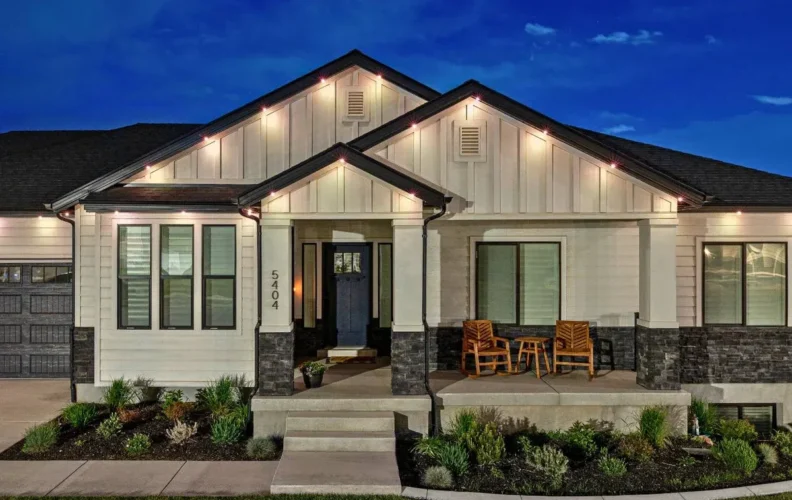
If you live in Lee’s Summit, you already know how quickly darkness arrives during a Missouri winter. A driveway that is bright and welcoming at 5 p.m. can become difficult to see by 6 p.m. Side yards, garage approaches, walkways, and landscaping can all create hiding places when the sun goes down.
That is where outdoor lighting for security can make a meaningful difference.
Lighting does not replace strong locks, cameras, alarms, or good visibility from neighboring homes. But it is one of the simplest and most cost-effective layers of residential security. Properly planned lighting can reduce dark hiding spots, make approaches more visible, support camera performance, and make your home look occupied.
The key is using light strategically: not simply making everything as bright as possible.
Why Outdoor Lighting Is an Effective Security Deterrent
Most people looking for an easy way to improve home security begin with expensive cameras or complex alarm systems. Those tools are valuable, but basic lighting deserves attention too.
A well-lit property makes it harder for someone to approach unseen. It can also help household members, guests, delivery drivers, and neighbors identify activity around doors, gates, and vehicles. When lighting works alongside locks, cameras, and alarms, it creates a more complete security plan.
Security guidance commonly recommends lighting:
- Front and back doors
- Driveways and garage areas
- Side gates and walkways
- Areas near ground-level windows
- Dark corners around landscaping and fences
The goal is not to flood your Lee’s Summit property with harsh white light. The goal is to create consistent, useful visibility where it matters most.
According to general home security guidance from Home Security Planning, lighting is most effective when it reduces concealment and supports other security measures. It should make your property easier to observe: not create glare, deep shadows, or predictable patterns that suggest nobody is home.
The Four Security Lighting Zones That Matter Most
Before adding fixtures, walk around your property after dark. Look at it from the street, driveway, sidewalk, and backyard. Where would someone be able to move without being seen?
Start with these four zones.
1. Entry Points
Your front door is important, but do not stop there. Include:
- Back doors
- Side doors
- Patio doors
- Basement entrances
- Gates leading toward the home
These areas should have enough light for you to see faces, steps, handles, and surrounding activity. Moderate, downward-directed lighting is usually more useful than an exposed bulb or high-powered fixture aimed directly outward.
A consistent glow around the primary entrance also makes the home feel occupied and cared for.
2. Driveway and Garage
Garages are common access points, especially when they connect directly to the home. Lighting should cover the driveway approach, garage door, side service door, and the route from the street to the house.
Avoid placing a bright light where it shines directly into a security camera. Instead, position lighting to illuminate the driveway and garage area from the side or above. That helps cameras capture usable detail without washing out the image.
3. Side Yards and Walkways
Side yards are often narrow, less visible from the street, and easy to overlook. They may also lead directly to a backyard gate, basement window, or rear entry.
Path lighting and low-level roofline or soffit lighting can help eliminate dark stretches. If a side path is rarely used, motion activation can add a useful burst of attention when movement occurs.
4. Dark Landscaping Corners
Large shrubs, retaining walls, fences, sheds, and decorative landscaping can create shadow pockets. You do not necessarily need a fixture aimed directly at every bush. Instead, use overlapping light to make the surrounding area visible and reduce places where someone could stand unseen.
Trim trees and shrubs as needed, too. Even a well-designed lighting plan can become ineffective when landscaping blocks the light.

Common Home Security Lighting Mistakes
More light does not always mean more security. In fact, poorly planned lighting can make your home less secure and less comfortable.
Mistake 1: Blasting Light Everywhere
A bright floodlight aimed across the entire yard can create extreme contrast. The area immediately around the fixture may be bright, while areas beyond it become harder to see.
Use targeted illumination instead. Light the approach, path, and entry: not just the wall of the home.
Mistake 2: Creating Glare for Cameras
A fixture pointed into a camera lens can overexpose the image and make faces or clothing details difficult to identify. The same glare can affect your own eyes when you look toward the driveway or door.
Use shielded or low-profile fixtures where possible. Aim lights downward and across the area you want to monitor. As Wirecutter’s smart lighting guidance explains, downward-directed lighting can provide a clearer view while limiting unnecessary glare.
Mistake 3: Using a Predictable Fixed Timer
A light that switches on and off at exactly the same time every day can broadcast your routine. If the lights remain on all day while you are traveling, they may even suggest that the home is unoccupied.
A better approach combines sunset-based scheduling, varied activity patterns, and an away setting when available. The lighting should look natural: like the home is being used normally.
Motion Lighting vs. Always-On Lighting
Both motion and continuous lighting have an important role in residential security lighting.
Always-On or Dusk-to-Dawn Lighting
A low-level baseline glow works well around:
- Front doors
- Main walkways
- Driveways
- Garage approaches
- Frequently used entrances
This provides steady visibility and makes the property feel active. You do not have to wait for a sudden burst of light to see where you are walking.
Motion-Activated Lighting
Motion lighting is helpful in areas that are less frequently used, such as:
- Side yards
- Rear gates
- Detached garages
- Sheds
- Back walkways
A sudden increase in brightness can draw attention to movement and disrupt someone’s attempt to approach quietly. However, motion sensors can also trigger from pets, passing vehicles, wind, or moving branches if they are poorly adjusted.
For many homes, the strongest plan is a combination: a consistent baseline glow plus a brighter motion accent in vulnerable or less visible areas. That approach is typically more comfortable than leaving harsh floodlights on all night, while still creating a noticeable response to activity.
How Permanent Lighting Makes Security Easier
Traditional motion floodlights and temporary string lights can help, but they also come with limitations. Fixtures fail. Bulbs burn out. Temporary strands sag or develop dark sections. Timers lose accuracy. And every fall, homeowners face ladders, cold weather, tangled wires, and seasonal removal.
Permanent lighting provides a more consistent delivery system for your security plan.
App-Controlled Schedules
With smart outdoor lighting, you can adjust colors, brightness, scenes, and schedules from a mobile app. That makes it simple to update your lighting for changing daylight hours in Lee’s Summit.
You can create a soft everyday setting, brighten key areas during arrival times, or adjust the schedule when you travel.
Sunset-to-Sunrise Automation
Missouri sunsets change significantly throughout the year. Sunset-based automation helps your lighting respond to the actual season instead of relying on a fixed clock time.
Your lights can come on when it becomes dark and turn off in the morning, providing a dependable baseline without requiring daily adjustments.
Security Presets and Zone Control
A permanent system can be programmed for different areas of the home. You might use warm white lighting in the front, a lower-intensity setting along the sides, and a brighter security preset at the rear.
Zone control also allows you to illuminate the front of the home differently from the backyard. This is useful when you want visibility where it matters without treating the entire property the same way.
Offline Operation
A temporary Wi-Fi interruption should not eliminate your security lighting. Permanent systems are designed to continue operating through their stored schedules and local controls even when the internet connection is unavailable. You can still use the app’s connected features when service returns, but a brief outage does not have to leave your exterior dark.
A Lived-In Look
The best security lighting does more than sit at full brightness all night. It creates a natural, lived-in look.
Subtle architectural lighting on the roofline can provide a consistent presence, while schedules and presets vary the appearance over time. You can use elegant warm white during ordinary evenings, then activate color changing outdoor lights for holidays, Chiefs game days, or special events.

Permanent vs. Temporary Outdoor Lighting
Temporary lights are often installed for a few weeks and then stored away. That creates several security drawbacks:
- Dead strands can leave dark gaps
- Loose wires can shift during wind and weather
- Bulbs and connections may fail mid-season
- Timers may be forgotten or incorrectly set
- Lighting disappears completely after the holidays
- Installation and removal require ladders and time
A professionally installed permanent system stays in place year-round. The low-profile, custom-channel design blends with your home during the day, while the LEDs provide illumination at night.
For a climate like Lee’s Summit, that permanence matters. Missouri wind, rain, ice, temperature swings, and summer heat can be hard on exposed wiring and temporary clips. A protected system is engineered for long-term outdoor use and backed by a lifetime product warranty.
The Curb Appeal Bonus
Security lighting does not have to make your home look like a commercial property or prison yard. When it is designed around your home’s roofline, trim, landscaping, and entry paths, it can look intentional and polished.
Permanent outdoor lighting can:
- Highlight architectural details
- Improve nighttime curb appeal
- Make walkways feel more welcoming
- Support outdoor entertaining
- Add year-round visual interest
- Create a finished, custom appearance
You get practical visibility without sacrificing the character of your home.
Build a Smarter Security Lighting Plan
Outdoor lighting is one layer of a complete home security strategy. Pair it with reliable locks, clear sightlines, maintained landscaping, cameras, alarms, and good neighborhood awareness.
Then make the lighting itself more consistent, controllable, and durable with a professionally installed permanent system.
If you are considering home security lighting in Lee’s Summit, Trimlight Lee’s Summit can help you evaluate your property, identify dark zones, and design a low-profile system for security, curb appeal, holidays, and everyday use.
Request a free consultation and quote for permanent outdoor lighting designed around your home.